Customer Challenges
- A normally unmanned installation, located in the UK Central North Sea has several wells in which the permanently installed monitoring systems failed early in the life of the wells
- Real-time reservoir monitoring is critically important on this NUI to allow the water and gas injection processes to be adjusted and optimised on a continuous basis
- As a result of the Permanent Downhole gauge failures, data gathering from these wells had been limited
- In addition, the normally unmanned installation status of the platform presents complex logistical challenges performing well interventions
- As a compromise, the customer had been deploying long term memory gauges so that a form of reservoir monitoring was possible
- However, memory gauges only provide historic data and there is no indication at surface whether the gauge is functioning correctly
- Having access to only historic data does not allow the water and gas injection process to be optimised in real time
- A well intervention also needs to be performed each time the data is required
Expro Excellence
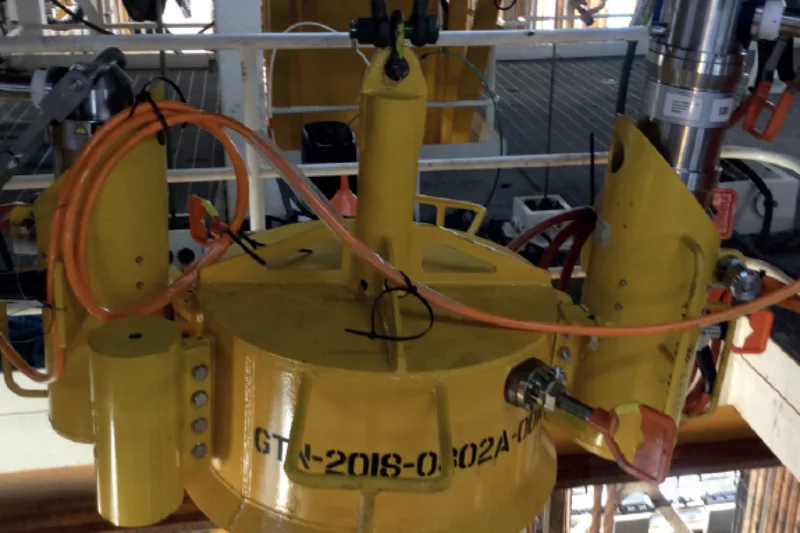
- A CaTS gauge was retrofitted into the well using standard slickline equipment and real time reservoir pressure and temperature data was successfully transmitted to surface
- The EM signal from the wireless gauge was transmitted wirelessly along the tubing unit it reached the failed permanent gauge mandrel. It was then picked up and transferred to the topside receiver using the permanent gauge cable as a conduit to send the signal along
- The failed permanent gauge mandrel was located at 2,200m and the gauge was set inside the production tubing at 2,280m
- This effectively provided a very short transmission range for the EM signal, which allowed the gauge to use less battery power for its data transmissions. This optimised the number of SRO data points available and maximised the longevity of the system
Value to Client
- We proved the original concept and successfully reinstated real-time reservoir surveillance using the failed permanent gauge and cable
- The number of interventions were reduced, saving cost and reducing risks
- Having access to real-time data enabled the dynamic optimisation of the well production daily
- It was possible to optimise the response of the reservoir water injection panel and continually update the reservoir model
- The data was also considered to be of value for performing pressure build-ups (PBU) and transient analysis. Acquiring real down hole data was a more reliable and accurate solution than attempting to extrapolate wellhead pressure measurements to bottom hole conditions
- By reinstating real-time reservoir surveillance, a new target well location was also determined
Contact
For further information, please contact wireless@expro.com.